- 6月 26 週四 200821:11
澳洲英式橄欖球National Rugby League(NRL) 100年(1908-2008)

- 6月 21 週六 200821:20
超搞笑:本土劇百大不可思議完全版
本文為轉寄郵件 原創者與來源不明
本土劇百大不可思議完全版,集結各位熱心板友的智慧,終於湊超過100條了!個人特別將之分為十大類,提供給大家看連續劇對照用。感恩 魯力!
【一、CEO之豪門恩怨篇】
本土劇百大不可思議之001 人人都是總經理
本土劇百大不可思議之002 CEO都是吃檳榔講台語
本土劇百大不可思議之003 財產動不動就上百億
本土劇百大不可思議之004 警察會變成台灣最有錢的CEO
本土劇百大不可思議之005 別人的公司可以隨便烙人進去
本土劇百大不可思議之006 公司再大職員還是一樣少
本土劇百大不可思議之007 BOT案永遠只有結怨的兩家可以承包
本土劇百大不可思議之008 成立公司的目的就只有一個 就是把對方幹了
本土劇百大不可思議之009 戲中一定會出現富可敵國可與微軟相比的跨國大企業
本土劇百大不可思議之010 通常總經理都不用做事!
本土劇百大不可思議之011 公司永遠只有5個人 雖然資產上百億
本土劇百大不可思議之012 簽合約都不看內容 而且不蓋章
本土劇百大不可思議完全版,集結各位熱心板友的智慧,終於湊超過100條了!個人特別將之分為十大類,提供給大家看連續劇對照用。感恩 魯力!
【一、CEO之豪門恩怨篇】
本土劇百大不可思議之001 人人都是總經理
本土劇百大不可思議之002 CEO都是吃檳榔講台語
本土劇百大不可思議之003 財產動不動就上百億
本土劇百大不可思議之004 警察會變成台灣最有錢的CEO
本土劇百大不可思議之005 別人的公司可以隨便烙人進去
本土劇百大不可思議之006 公司再大職員還是一樣少
本土劇百大不可思議之007 BOT案永遠只有結怨的兩家可以承包
本土劇百大不可思議之008 成立公司的目的就只有一個 就是把對方幹了
本土劇百大不可思議之009 戲中一定會出現富可敵國可與微軟相比的跨國大企業
本土劇百大不可思議之010 通常總經理都不用做事!
本土劇百大不可思議之011 公司永遠只有5個人 雖然資產上百億
本土劇百大不可思議之012 簽合約都不看內容 而且不蓋章
- 6月 20 週五 200812:47
Beijing Olympics --Limbering up for the games
 |  | |  | | |

Beijing Olympics
Limbering up for the games
Jun 19th 2008 | BEIJING
From The Economist print edition
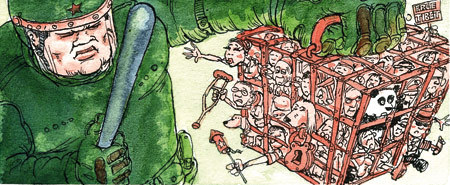
The security forces rehearse their exercise routine
PETS, prostitutes and prospective political protesters should consider themselves forewarned. The Chinese authorities, doggedly determined to ensure a safe environment for the Beijing Olympics in August, and to avoid surprises or embarrassments, have them in their sights.
No one dismisses the security concerns. With the ever-present threat of terrorism and a number of foreign leaders, among them George Bush, expected to attend the games' opening ceremony, China has no choice but to take security seriously. But the clampdown now under way suggests the government is just as concerned about preventing anything—from political demonstrations to unsightly beggars—that reflects poorly on it, however slightly. The risk is that heavy-handed precautions will take the fun out of what is supposed, after all, to be a sporting event.
Some new restrictions seem reasonable. For three months, for example, fireworks will be banned. Lorries entering Beijing have been coming under closer inspection. So has the mail. Police raids have been stepped up at night-spots, beauty salons and karaoke parlours, which often serve as fronts for prostitution. The press has reported that officials are especially worried about an influx of foreign prostitutes hoping to cash in on the Olympic boom, and that they have launched a campaign to prevent it.
But other measures smack of overkill. Beggars and disabled people have been ordered, and in some cases forced, off the streets. Those from outside Beijing have been threatened with detention unless they go home until the games are over. In your correspondent's own neighbourhood, residents have been told they may walk their dogs only at certain, strictly limited, times of day—and the dogs must carry their papers at all times.
Documents are posing problems for people, too. In one especially damaging consequence of the crackdown, China has tightened visa procedures for foreign visitors of all sorts. Businessmen used to speedy visas are now suffering delays and refusals. Chambers of commerce from Europe, North America, Australia and India are complaining bitterly about trips aborted and business lost.
Long-time foreign residents are faring no better. Visa renewals are no longer routine. Applicants may be told to undertake costly travel and submit their paperwork at Chinese embassies in their home countries. Others are simply told not to bother and to plan instead on being elsewhere.
Authorities have also served notice that Olympic visitors will themselves be carefully watched. A helpful “legal guide” tells foreign athletes, officials, reporters and spectators how to behave. In addition to shunning narcotics, weapons and counterfeit currency, they should abjure “subversive activities” or the “display of religious, political or racial banners”. Of course China does not normally allow those things anyway and, having staked so much prestige on the games, is in no mood to loosen up now. Recent events have only hardened attitudes. After deadly riots in Tibet in March, China's global Olympic-torch relay attracted boisterous protests around the world against a wide range of Chinese human-rights practices. Authorities are keen to prevent any such outbursts on their home turf.
They will probably fail, if only because of the huge number of visitors and the determination of some to make a statement. But ponderous attempts to keep control may dampen the Olympic mood. An ungracious host may give visitors one more reason to protest.
- 6月 16 週一 200823:10
National Geographic--China, Inside the dragon

May 2008的National Geographic,專題報導中國,內容正面負面皆有。其中也介紹了很多不同於漢族的其他民族文化,詳細描繪各族的分佈區域與比例。
這張圖的另一邊寫著THE ROAD AHEAD
China's expectation are rising, with no end in sight. What's next?
Fragile nature meets technological ambition
in the labor-roughened hands of a track worker. Li Yingde captured this snow finch while working on a new high-altitude section of China's 2,525-miles Beijing-to-Lhasa railway.
我剛翻到這頁時,其實很難過。這頁想表達大自然面對中國發展野心的挑戰,這隻鳥是工人抓到的。鳥的眼神告訴我,牠在乞求一條生路,但是,牠感覺沒希望。
離開都市,鄉下就是這個樣子,所有的每戶人家大小都是這樣。去過中國的人,離開都市仔細觀察鄉村,就是這個樣子。若搭火車,離開城市,鄉間的房子都大致是這樣。
- 6月 10 週二 200817:43
Transformer Hooter 變形貓頭鷹-ふくろう
說明:
這種來自非洲的貓頭鷹會變形。
遇到體型不大的敵人時,就會張開翅膀把自己撐大,向對方嗆。
遇到體型大自己太多的,就會自行收縮,讓自己看起來像樹枝,而且隨著對方的移動,牠自己也會移動,讓對方視線看到他還是會認為是不動的樹枝。
- 6月 09 週一 200817:37
Girly Football Players
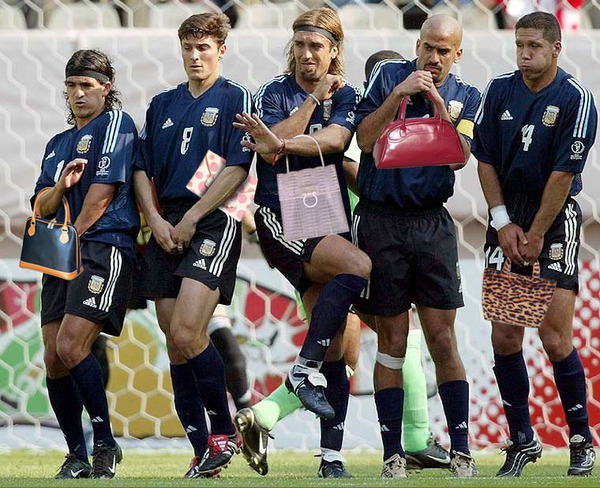
在足球場上,防守球員面對自由球時,防守人牆都會出現這樣的反射動作。只是這張圖被放了女性用的包包,突然就覺得很冏,尤其裡面還有我喜愛的球員Gabriel Omar Batistuta。
Origin: www.funny.com.uk
- 6月 05 週四 200819:11
Asia-Pacific Union: Australasia

2008年6月4日,Kevin Rudd的雪梨對Asian Society這組織的一場演講時,宣布要在2020年之前成立Asia-Pacific Union,在APEC所屬的21個會員中再加上印度。Kevin Rudd在宣布此項計畫時,也找來了當時主導APEC的領魂人物Richard Woolcott 擔任特使處理此事。1989年Richard Woolcott 擔任Hawke政府的特使奔走APEC,現在事隔將近20年後再度出馬。
雖然本系的教授們壓倒性支持工黨,但在6月5日時,我和一個博士後研究員在吃飯時,一位本系的教授走過來打招呼,直接就是開口批評這個政策,暗示澳洲自己應該是歐洲,不屬於亞洲。
圖說:APEC的推手Richard Woolcott於1967年與蔣介石總統會面。在Richard Woolcott的自傳裡,這張照片的說明是:「Meeting Generalissimo Chiang Kai-shek, April 1967. The Holt Government recognised Taiwan as the Government of China.
The Australian的特刊封面。
- 5月 23 週五 200819:06
Obama
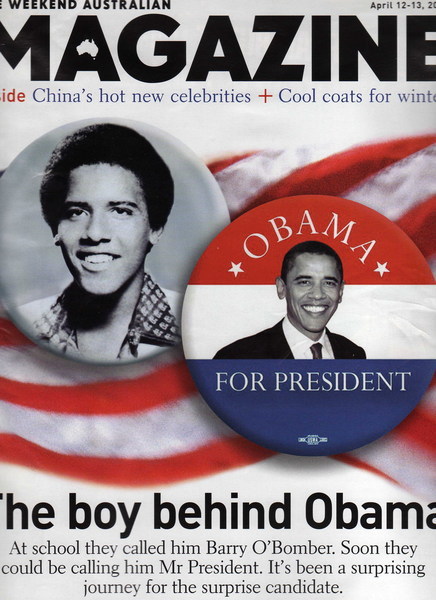
澳洲人也是很喜歡談Obama,幾年前相信很多人都認為民主黨總統參選人非Hillary Clinton莫屬,只是沒想到Obama一夕間人氣暴漲。
- 5月 22 週四 200820:01
Welcome foreign media
奧運在即,中國對於四川地震的媒體開放程度,讓西方媒體也感到驚訝萬分。完全與2008年3月鎮壓西藏的態度大為不同。
插圖內文寫著:There must have been an earthquake at the Ministry for Media.
scanned from The Australian 2008-05-22

插圖內文寫著:There must have been an earthquake at the Ministry for Media.
scanned from The Australian 2008-05-22
